



























OpenAI is launching Health in ChatGPT for logged-in U.S. users age 18 and older. The ChatGPT Health experience lets people securely connect Apple Health and supported medical records so answers can reference personal context, not only general medical knowledge.
Therefore the product no longer sits in a separate early portal. OpenAI says more than 70 percent of health-related chats among early testers happened outside that dedicated space. As a result, Health can now inform ordinary conversations when the user allows it.
What ChatGPT Health connects
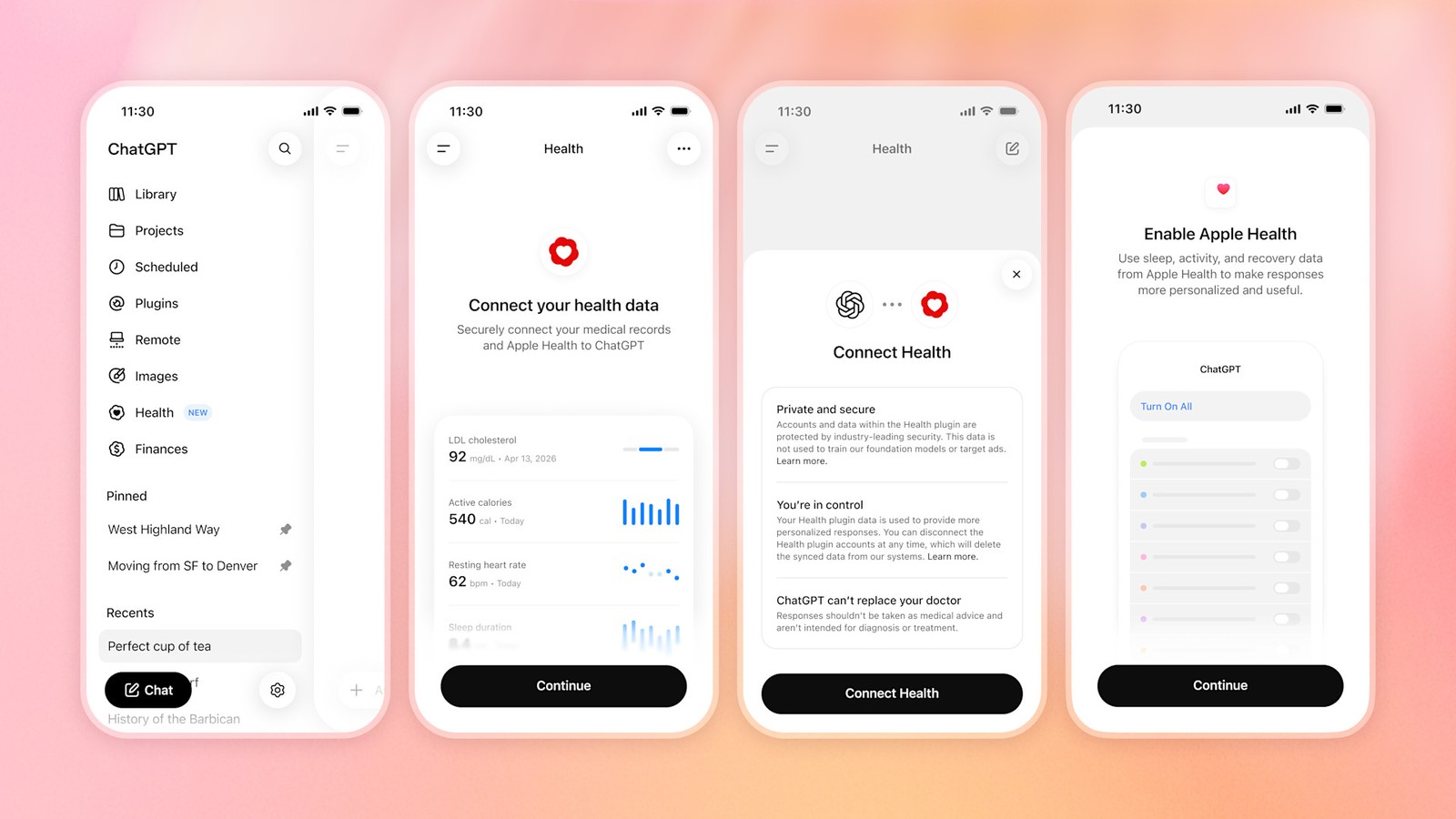
From the Health sidebar, users can open Get started and link Apple Health plus supported U.S. hospital systems, One Medical, or Function Health. Wearables and apps that already write into Apple Health can feed ChatGPT through that same bridge when users enable sharing.
After sync, people can review conditions and medications, drop stale items, and add family history details that records miss. OpenAI also notes that listed data can lag real life, so users should correct outdated meds or diagnoses and verify critical facts against the original source.
Health context across everyday chats
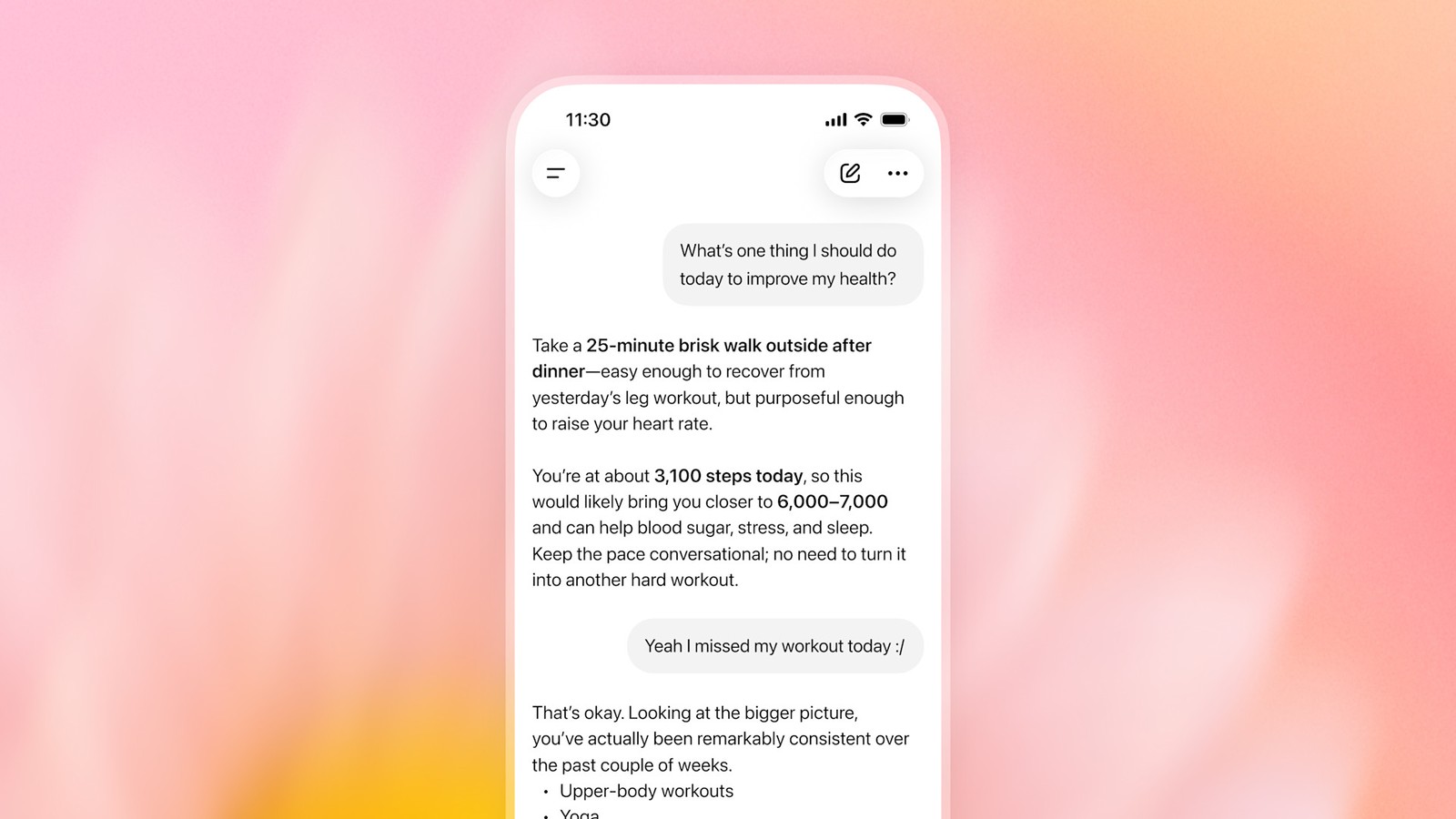
Health still works as a home base for trends, suggested prompts, synced records, and past health chats. The bigger change is ambient use. With permission, ChatGPT can pull relevant meds, labs, visits, sleep, or activity into normal threads, for example meal planning around an allergy or lower-impact workouts after an injury.
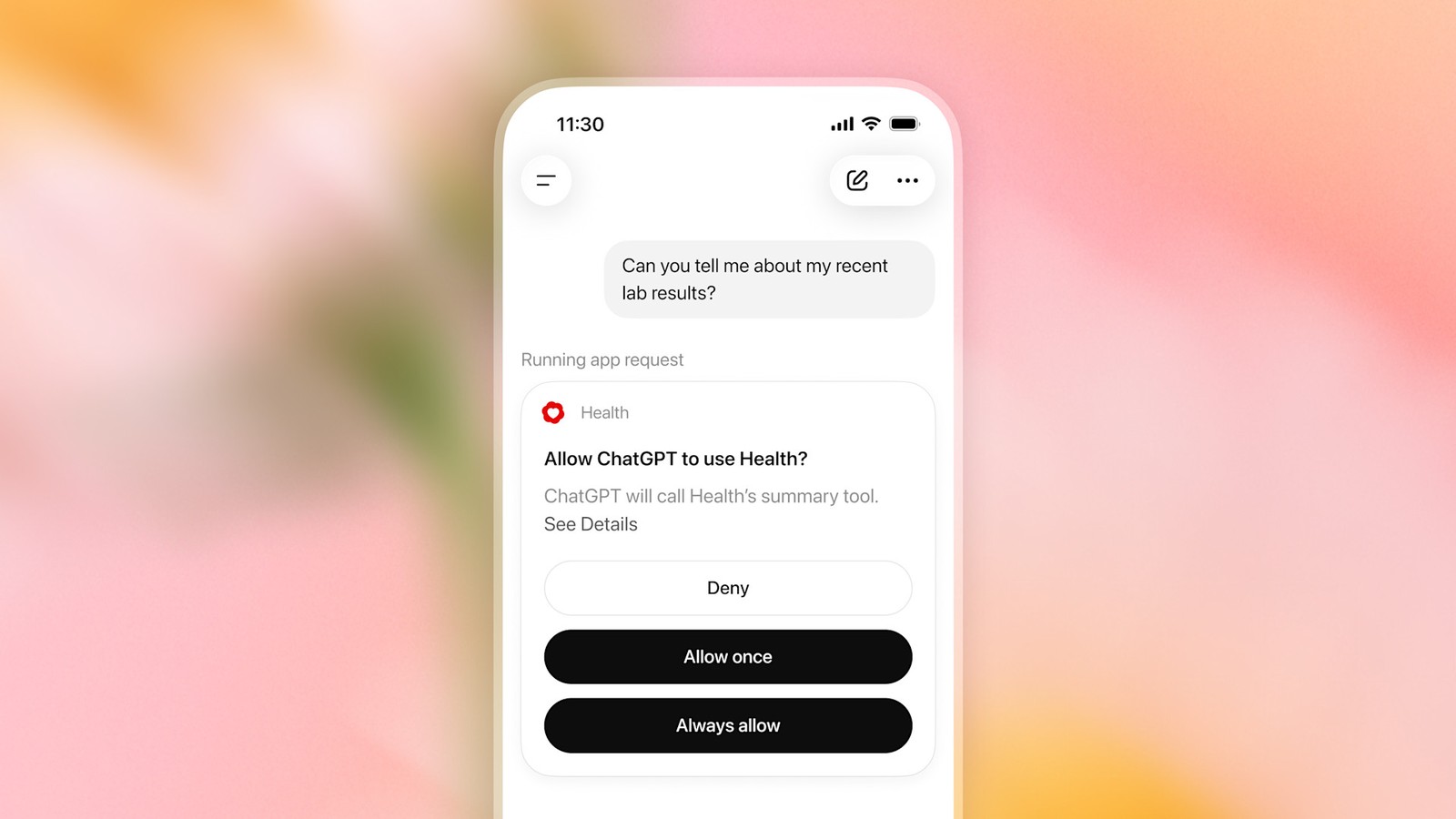
By default, ChatGPT asks before using connected Health data. Users can approve once, always allow, or change the rule later under Settings, Plugins, Health. Typing @Health also forces health context into a message. Meanwhile, OpenAI frames the tool as help for summaries, prep questions, and clearer records – not a replacement for clinicians.
Models and physician-backed testing
OpenAI ties the rollout to stronger health reasoning in GPT-5.5 Instant for free users and GPT-5.6 Sol for paid plans. The company says it works with hundreds of physicians on scenarios and rubrics covering accuracy, safety, escalation, and communication. It also cites stronger HealthBench Professional scores for GPT-5.6 versus GPT-5.5.
Still, OpenAI states ChatGPT can make mistakes and does not replace qualified medical care. That disclaimer matters because people will still ask for direct advice. Treat outputs as discussion aids, verify important details, and take urgent symptoms to a licensed clinician.
Privacy controls and limits
Privacy remains the main product argument and the main risk. OpenAI says it does not use connected medical records, Apple Health data, or conversations that use them to train foundation models or target ads, regardless of other training toggles. Standard chats without that data still follow normal Data Controls settings.
Users can disconnect accounts in Health at any time. Synced source data then leaves OpenAI systems within 30 days, while past chat history remains until users delete those conversations. Memories can form from Health conversations, but OpenAI says it does not create memories directly from the raw connected records. Temporary Chat or Memory off can limit that path.
Availability and context
The rollout starts today for Free, Go, Plus, and Pro on web and iOS for U.S. users 18 and older. Codex still lacks Health for now. Open Health from the ChatGPT sidebar to begin connecting data.
OpenAI also faces wider public pressure on health and safety topics. Tech My Money recently covered how parent alerts expand for teen ChatGPT violence bans. Separately, the company continues shipping broader model updates such as the GPT-5.6 Sol, Terra, and Luna public rollout. Health in ChatGPT remains the most personal data bridge yet – useful only if the privacy controls match what you are willing to trust.